
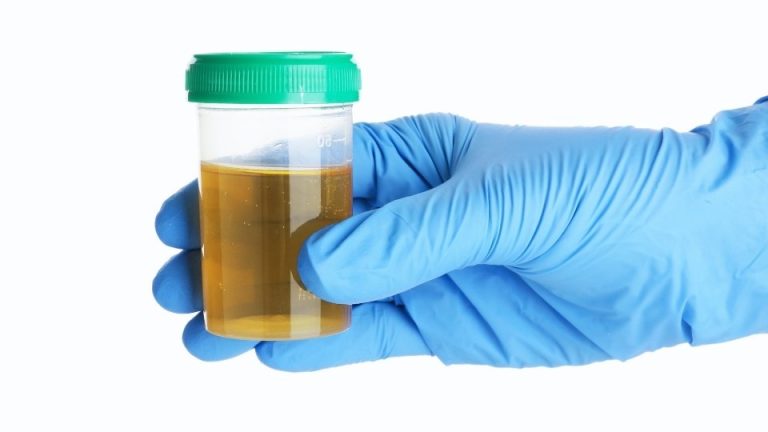
Promethazine is a widely used prescription medication, yet many people still wonder whether it will appear on a screening before a new job, a treatment intake, or a routine visit with a healthcare provider. The short answer is reassuring for most: promethazine does not show up on standard panels, although specialized testing can detect promethazine when a lab is specifically looking for it. In some cases, it may also contribute to a false positive on certain initial amphetamine drug screens. If you or someone close is worried about promethazine use, our substance abuse treatment team can help you understand the risks and find a steady path forward.
This guide explains how it works, how long promethazine stays in your system, when a drug test can find it, why false positives happen, and why the codeine mixture known as purple drank carries serious risks.
Will Promethazine Appear on a Standard Drug Test?

For most people, the answer is reassuring. Standard workplace or clinical screenings typically do not test for it, so a prescribed dose is unlikely to register on a routine panel.
Promethazine does not show up on standard drug tests, but it can be identified with specialized toxicology screenings when a clinician has a reason to look. These specialized panels are not part of most employment checks. A false positive is possible on some initial screens, so confirmatory testing matters.
Still, taking promethazine can lead to sedation and other physiological effects that may interfere with certain medical evaluations. Disclosing prescription medications before any drug test is recommended so results are read in context and to avoid misinterpretation.
What Is Promethazine and How Does It Work?
Promethazine belongs to a class of drugs called phenothiazines. It is a first-generation H1 antihistamine with sedative and anti-nausea effects, and it has weaker dopamine-blocking properties than antipsychotic phenothiazines.
Because it works by blocking histamine, it can alleviate nausea and vomiting, reduce allergy symptoms, and produce sedative effects. That makes it useful to treat conditions like motion sickness and allergic reactions, and doctors also prescribe it to treat allergies and to ease nausea after surgery.
The central nervous system is primarily affected, which can lead to drowsiness. Those sedative effects on the central nervous system are primarily responsible for its appeal in misuse, so it is wise to use it under medical supervision and to avoid mixing it with other depressants.
Promethazine hydrochloride, sometimes written as promethazine HCl, is the salt form found in tablets, suppositories, injectable forms, and liquid form syrups. The liquid form is the base for a promethazine cough syrup and for the recreational mixture discussed later.
Common Reasons People Take Promethazine

It is prescribed for several conditions across different categories, which helps explain why it rarely appears on a screening.
- Allergy symptoms, such as a runny nose, watery eyes, and sneezing, can be calmed by blocking histamine, which calms the immune system response.
- Motion sickness before flights or long car rides is often taken ahead of travel.
- Nausea and vomiting after surgery, where the calming effect helps patients rest.
Used as directed for allergic reactions or motion sickness, it has a long track record as a helpful option. Problems tend to begin with promethazine misuse, higher doses, or combining it with other medications and substances.
How Long Does Promethazine Stay in Your System?
How long promethazine stays in the body depends on the test, the dose, and individual factors. Most people clear it within a few days, though repeated use, higher doses, slower metabolism, and the type of test used can extend detection.
When targeted testing is used, urine detection is often discussed in the range of a few days, but exact windows vary by dose, frequency, metabolism, cutoff, and lab method. Urine testing is the most common method when a lab needs to detect promethazine.
Blood and saliva usually have shorter detection windows, while hair testing can reflect longer-term exposure. These methods are rarely used for promethazine, and exact windows vary.
Promethazine Half-Life Explained
The elimination half-life ranges from 10 to 19 hours, meaning the medication can remain in the body for several days after the last use. A half-life is the time it takes for half a dose to clear, so how long promethazine remains depends on how many cycles have passed.
Individual factors shape how long promethazine stays in your system. Liver health, age, dose, frequency of use, metabolic rate, and overall health can affect clearance. Because liver health and metabolic rate differ from person to person, two people can show different windows after the same amount.
Detection Windows on a Drug Test
The table below summarizes how long promethazine stays detectable across common methods. These ranges are rough estimates for targeted toxicology testing, not guaranteed windows on standard drug panels, since promethazine stay times vary with dose and other factors.
| Test type | Detection window | Notes |
|---|---|---|
| Urine testing | A few days, depending on dose and frequency | Most common method to detect promethazine when targeted testing is used |
| Blood tests | Shorter window | Often used clinically |
| Saliva tests | Shorter window | Less common, easy to collect |
| Hair follicle tests | Potentially longer-term exposure | Rarely used for this purpose |
Why a Standard Drug Test May Miss It
Standard panels are built to flag common drugs of abuse such as opioids, amphetamines, cocaine, and cannabis. It is not one of the compounds standard drug panels are designed to find, so it usually passes unnoticed.
Because most screens skip it, detecting it requires a targeted toxicology screen. Confirmatory tests like Gas Chromatography-Mass Spectrometry, or GC-MS, are necessary to accurately identify the compound when its presence matters.
Can It Trigger a False Positive for an Amphetamine Drug?
Yes. False positives can occur on some initial urine immunoassays because promethazine or its metabolites may cross-react with amphetamine or methamphetamine screens. The initial screens that flag this are abuse immunoassays, which sort results by drug class rather than naming an exact compound.
Because those screens react to chemical similarities, it can produce a false positive for an amphetamine drug on a first-pass test. When a false positive occurs, laboratories must run a confirmation test to distinguish it from illicit substances, which is why GC-MS matters.
False positive results are one more reason to disclose every prescription drug before testing. Documented use lets a flagged screen clear quickly once the confirmation test sorts out the actual compound.
Is Promethazine a Controlled Substance?
On its own, promethazine is not a controlled substance. It is a prescription drug that is not scheduled when used by itself to treat allergies, motion sickness, or nausea.
The picture changes with codeine. Promethazine itself is not scheduled, but promethazine-codeine oral solution contains codeine, a Schedule V controlled substance, which creates risks of abuse, dependence, overdose, and death. So it is unscheduled alone, but combined with codeine, it becomes a scheduled drug because of that potential for misuse and dependence.
Is Promethazine Addictive on Its Own?
Promethazine has misuse potential and may become habit-forming in some cases, especially with repeated high-dose or recreational use, but the addiction risk is much higher when it is combined with codeine in cough syrups or with other depressants. Some people chase the calm, drowsy feeling and begin taking promethazine more often or at higher doses than prescribed.
Whether promethazine is addictive depends partly on how it is used. A short course as directed carries low risk, while repeated recreational use raises the chance of dependence and promethazine abuse.
Recognizing Promethazine Addiction
Promethazine-codeine misuse often starts quietly, with someone using cough syrup for its calming or euphoric effects rather than for a cough. Over time, tolerance builds, and the person needs more for the same effect.
Long-term misuse, especially when promethazine is combined with codeine or other substances, can lead to withdrawal symptoms such as anxiety, nausea, shaking, cravings, and physical discomfort, which makes it difficult to quit without professional help. These negative effects signal that the body has adapted.
Warning signs worth watching for include the following.
- Using cough syrup without a current medical need or in larger amounts than prescribed.
- Combining the medicine with other drugs, alcohol, or other depressants can deepen the sedation.
- Continued use despite dry mouth, blurred vision, impaired coordination, or other side effects.
If you notice these patterns in someone close to you, it may be time to talk about evidence-based treatment and the options that help someone overcome addiction safely.
Lean and Purple Drank: Why the Mixture Raises Serious Risks
The combination of promethazine and codeine in cough syrups, often called Lean or purple drank, is known for its euphoric and sedative effects, but it carries significant risks, including addiction and overdose. The recreational mixture is usually made by mixing the syrup with soda and candy.
Codeine is a major source of the opioid high and overdose risk, while promethazine adds sedation and can increase impairment. Misuse of the combination can lead to severe health complications, including respiratory depression, especially when paired with alcohol or benzodiazepines.
Purple drank is not a harmless trend. The mixture poses serious addiction risks, including overdose and death from respiratory depression.
Polydrug abuse, which involves mixing promethazine with other substances like alcohol or opioids, is highly dangerous and raises the risk of addiction. Anyone using purple drank regularly should treat it as a serious addiction concern, much like other opioid use. You can read more in our guide on how long opioids stay in your system.
How Abuse Immunoassays Read the Result
The rapid first-step screens used in most urine screens group results by drug class, so a structurally similar compound can read as positive even when the actual substance differs. This is how it can create false positives for amphetamines.
The takeaway is that a confirmation test, not the initial screen, is the deciding result. The same logic affects many other drugs, which is why labs treat first-pass positives as preliminary.
The Role of Medical Detox in Recovery
For someone with codeine dependence, heavy promethazine misuse, or polydrug use, stopping suddenly can be uncomfortable and sometimes risky. Medical detox provides a supervised setting where medical professionals monitor symptoms and help manage withdrawal safely.
A medical detox program can help manage withdrawal safely, especially when opioids, alcohol, benzodiazepines, or multiple substances are involved. Our medically supervised detox supports the body through the hardest early days. You can also learn what to expect from a medically induced drug detox and from broader drug detox treatment.
Addiction Treatment That Supports Lasting Recovery
Detox is the first step, not the whole journey. Lasting recovery usually comes from ongoing addiction treatment that addresses why the substance use started.
Effective addiction treatment for this kind of misuse often combines therapy, peer support, and relapse prevention. According to the National Institute on Drug Abuse, programs that treat substance use disorders work best when they look at the whole person rather than a single substance. Many people benefit from understanding the stages of addiction recovery and the types of substance use disorders before they begin.
Because purple drank involves an opioid, care that addresses opioid dependence is often relevant. Our guide to leading treatment for opioid use disorder and information on fentanyl detox help families see the bigger picture. For comparisons, our articles on whether gabapentin is addictive and whether muscle relaxers can be addictive add useful context.
How to Support a Loved One Through Promethazine Misuse
Watching a loved one struggle with promethazine misuse is hard, and it can be tempting to either ignore the problem or push too forcefully. A calmer, informed approach tends to work better.
Start by learning the facts, then open the conversation without judgment. Our guide on supporting a loved one in addiction treatment offers practical steps. If they mix substances, understanding what it means when something is laced with other substances can help you grasp the risks.
When the time comes, a healthcare provider can guide the next steps, and a structured substance abuse treatment program gives them the support that makes recovery realistic.
How Promethazine Compares With Other Medicines
People often ask how it compares with other drugs they may be screened for. Detection windows vary widely, which is why no single rule fits every substance.
For context, you can review how long fentanyl stays in your system, how long cocaine stays in your system, and how long methamphetamine stays in your system. These comparisons show why it behaves differently from common drugs of abuse on routine panels.
Does Promethazine Show Up on a Drug Test? Frequently Asked Questions
Does promethazine show up on a standard panel?
Promethazine does not show up on most standard panels, since these tests are not designed to find it. It can be identified with specialized toxicology screening, and confirmatory tests like GC-MS confirm its presence. Telling the testing facility about any prescription medication helps avoid confusion.
How long does promethazine stay in your system?
It depends on the test. When targeted testing is used, promethazine may be detectable for a few days in urine, for a shorter period in blood or saliva, and potentially longer in hair, but exact windows vary by dose, frequency, metabolism, cutoff, and lab method. A half-life of 10 to 19 hours means small amounts can linger for several days.
Can it cause a false positive on a drug screen?
Yes. Promethazine can trigger false positive results because it shares structural features with certain compounds and may read as an amphetamine on some urine screens. A confirmation test sorts out the difference, which is another reason to disclose use before any drug test.